Brutalist Architecture: Concrete, Controversy and Renewal
Brutalist architecture emerged in the 1950s as a bold, concrete-driven style born from post-war needs. Despite its polarizing reputation—"love it or hate it"—Brutalism’s raw forms and honest materials have lasting impact. This article explores Brutalism’s history, key characteristics, and its complex legacy in Mexico and beyond. We highlight case studies of iconic buildings and adaptive reuse projects, offering practical insights for designers.
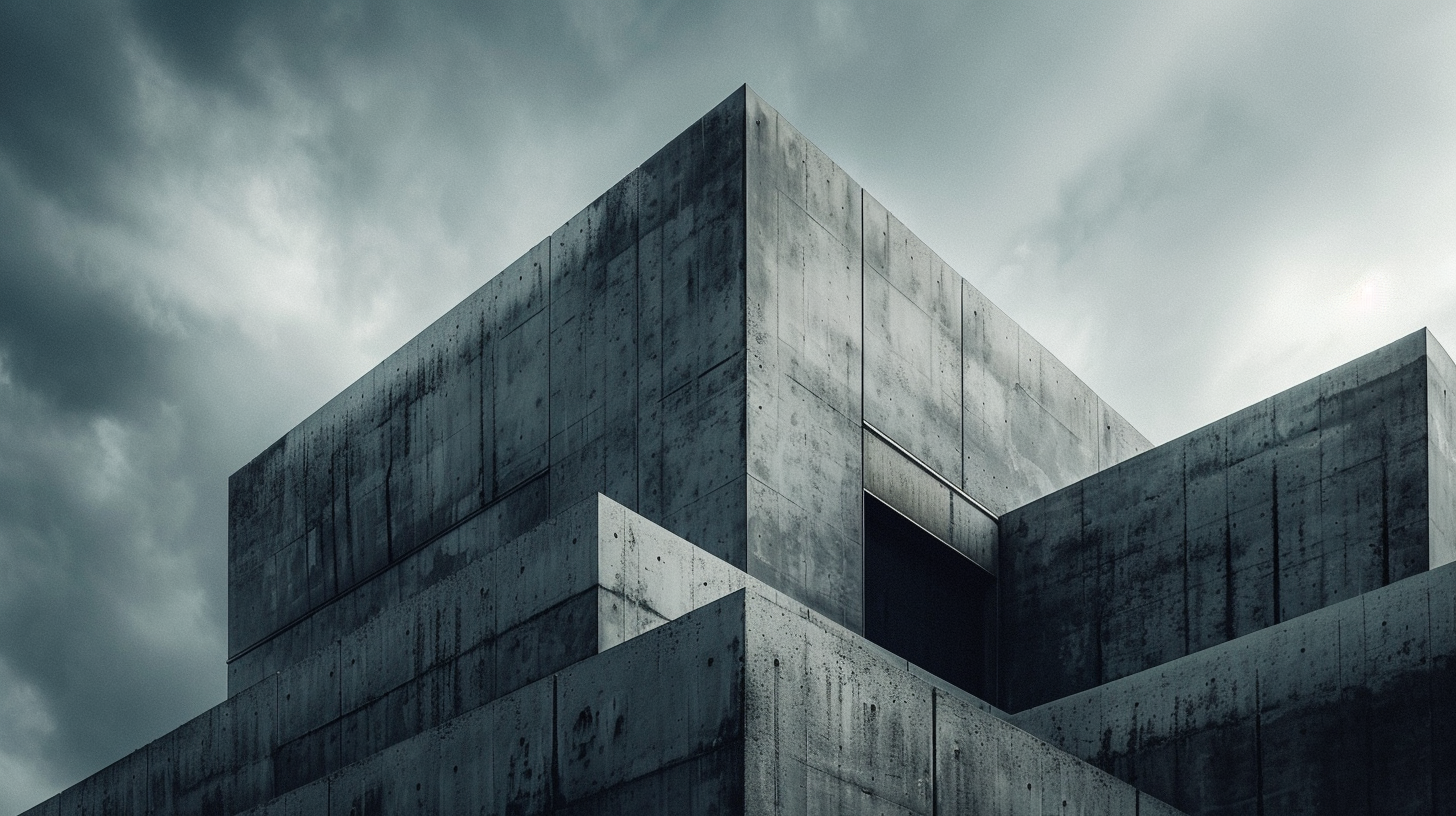
What Is Brutalism? Origins and Definition
Brutalism (from French béton brut, “raw concrete”) originated in post-WWII Britain, championed by architects like Le Corbusier and the Smithsons1. It is defined by exposed concrete surfaces, monumental massing, and geometric rigor. In its heyday (1950s–70s), Brutalism met urgent needs for housing and civic buildings. Concrete offered a “flexible yet solid, malleable yet permanent” solution for large-scale projects.
Key Features:
Material Honesty: Unadorned concrete or brick facades
Monolithic Forms: Blocky, fortress-like volumes
Geometric Patterns: Repetitive grids and deep shadows
Functional Expression: Structures that reveal function (e.g. protruding stairwells)
Brutalist buildings often feel “weighty”, emphasizing volume and gravity. Walking through one, you notice the intricate play of light and space – a unique spatial experience.
Brutalism’s Legacy: Love, Hate, or Indifference
Brutalism has always provoked strong opinions. As a JSTOR analysis notes, it quickly became “an aesthetic only an architect could love,” yet it “continues to elicit strong reactions” today. Critics call it cold and oppressive, while fans celebrate its honesty and sculptural power.
Design-savvy Perspective: For architects and designers, Brutalism’s appeal is clear:
Structural Clarity: No illusions or façades – form follows function.
Durability: Massive concrete can endure for centuries.
Adaptability: Its open, robust spaces can be reimagined (see Adaptive Reuse below).
In Mexico, Brutalist influence appears in modern projects and museum designs. A contemporary ArchDaily article highlights Mexican buildings drawing on Brutalist motifs. We’ll look at specific examples:
1. UNAM Central Library (Mexico City) – Modernism with a Brutalist Touch
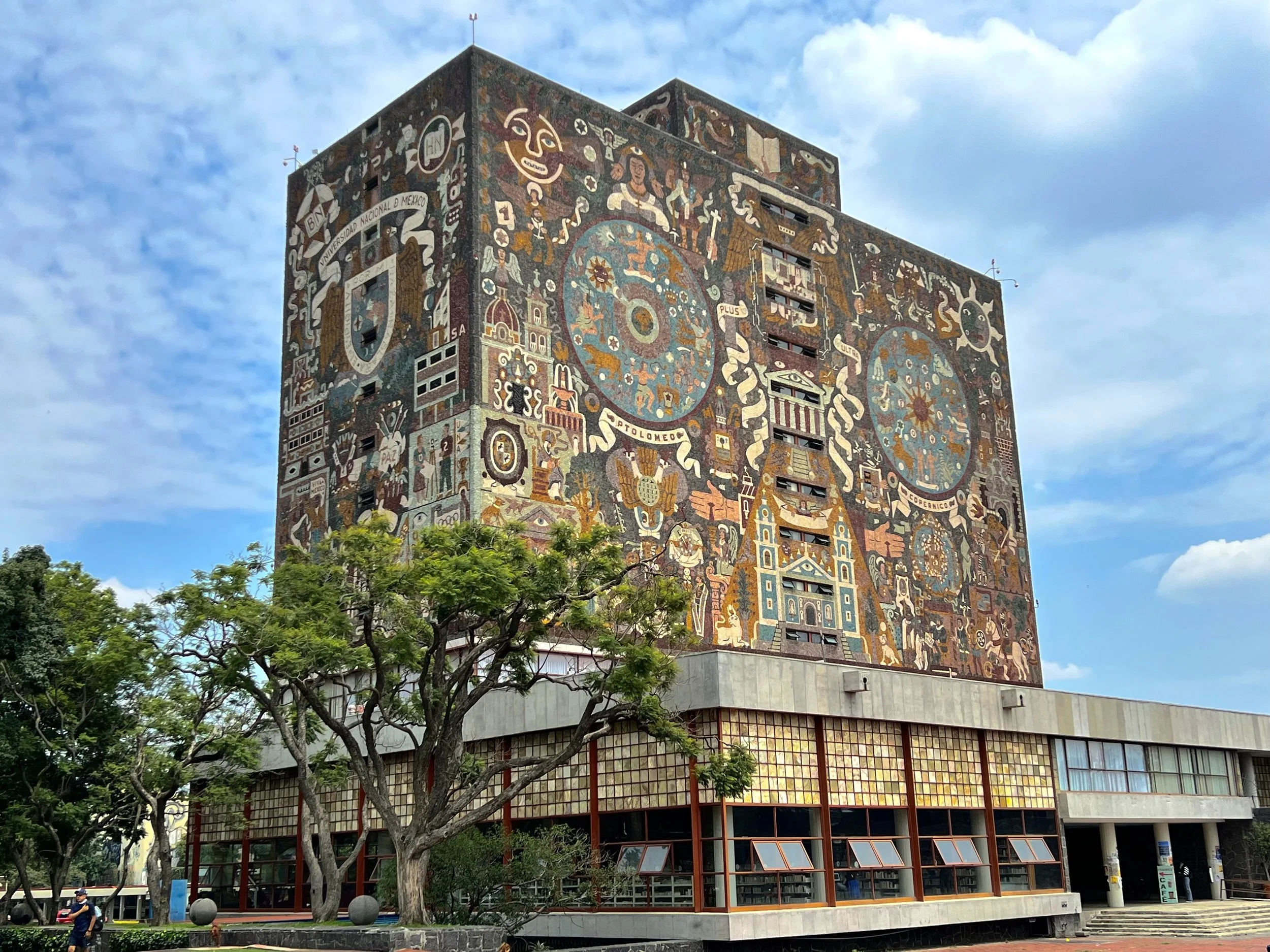
While famous for its mosaic exterior, UNAM’s campus (a UNESCO site) features other concrete forms. The Faculty Tower (Torre de los Ferrocarrileros) by Mario Pani (1950s) is an early Mexican skyscraper with raw concrete and recessed balconies – a forerunner to later Brutalist trends.
2. Banco de Londres Building, Buenos Aires (1960) – Concrete Monument
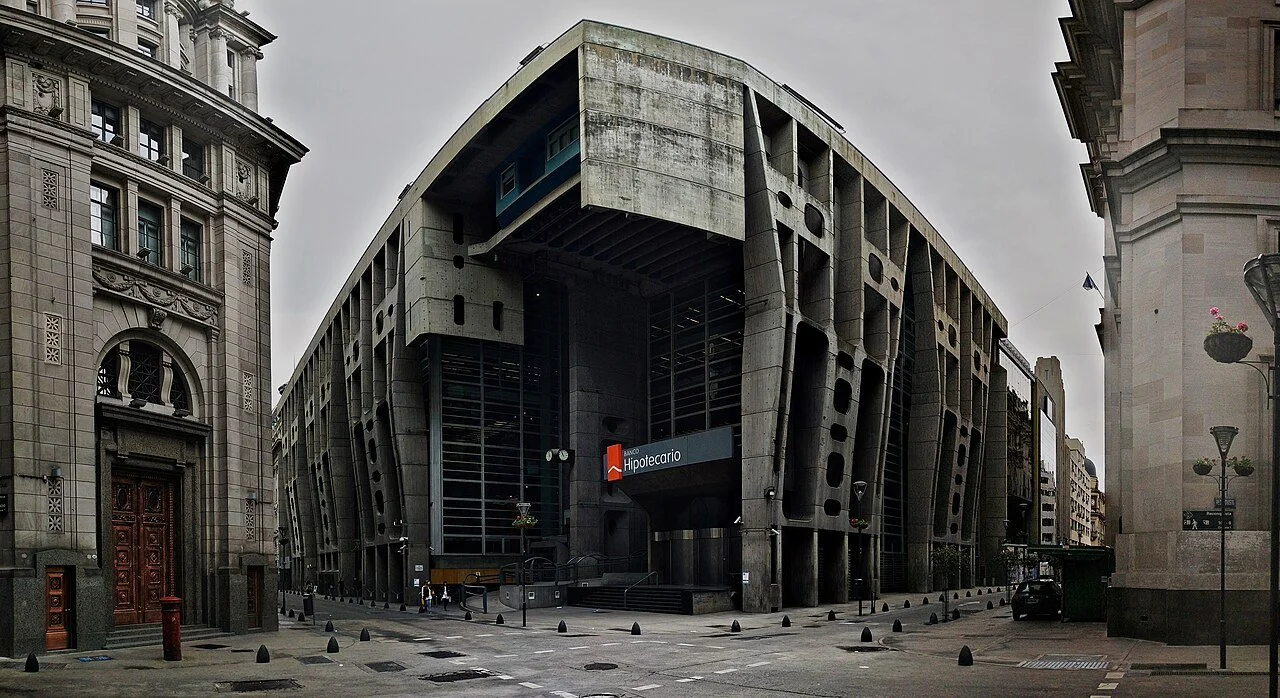
An iconic Latin American example, this heavy concrete office block (Testa/Bullrich/Cazzaniga) shows how Brutalism adapted to urban contexts. Its bold geometric massing and sculpted details illustrate Brutalist principles applied to commercial architecture.
3. Venustiano Carranza Gate, Mexico City (1980s) – Soviet-Influenced Design
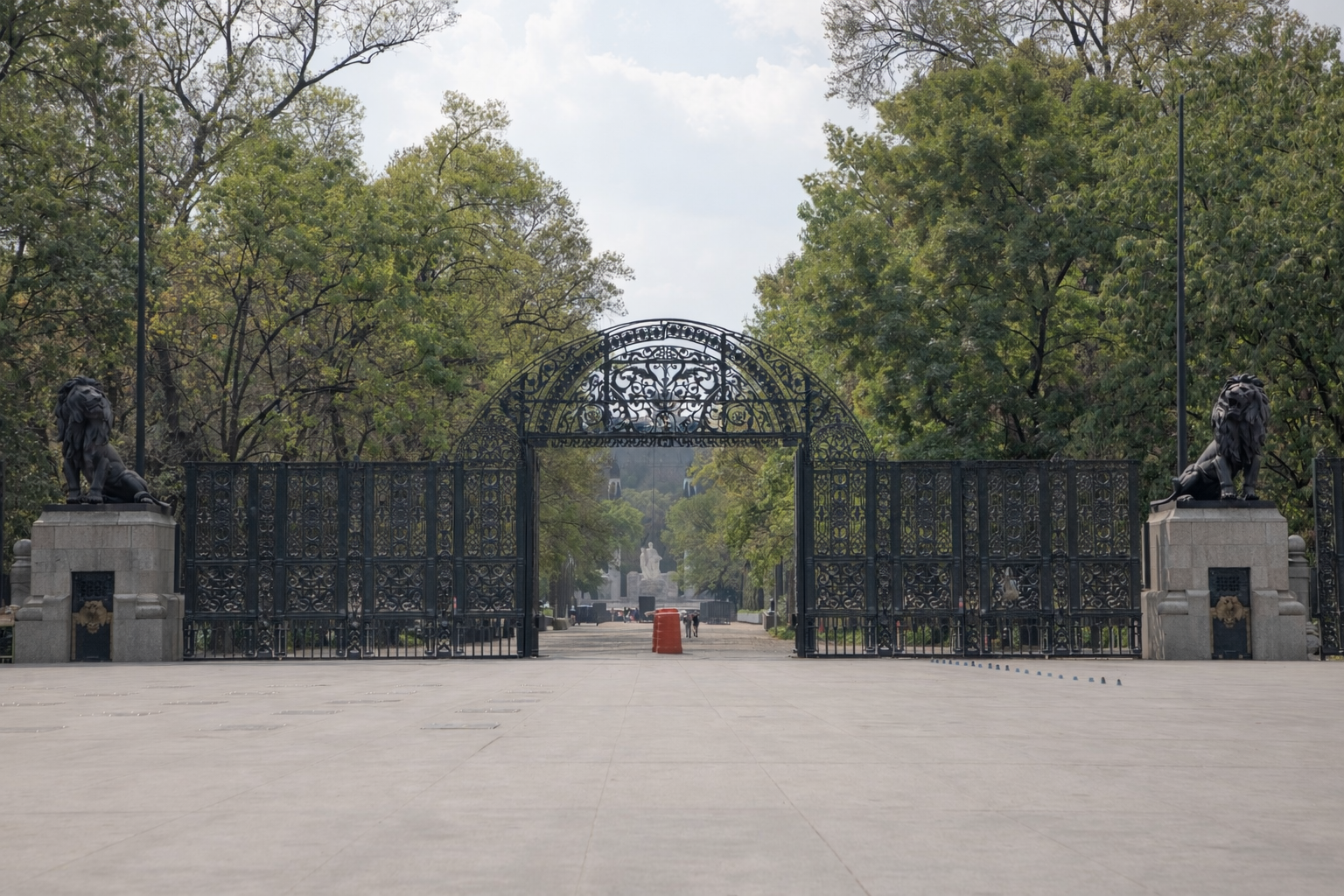
A massive gateway structure in CDMX, often dubbed “Puerta de los Leones,” reflects socialist-era Brutalism. Its unfinished concrete surfaces and looming presence made it controversial, yet it embodies the scale and form common to the style.
4. Adaptive Reuse Example: Boston City Hall (USA) – Saving a Concrete Icon
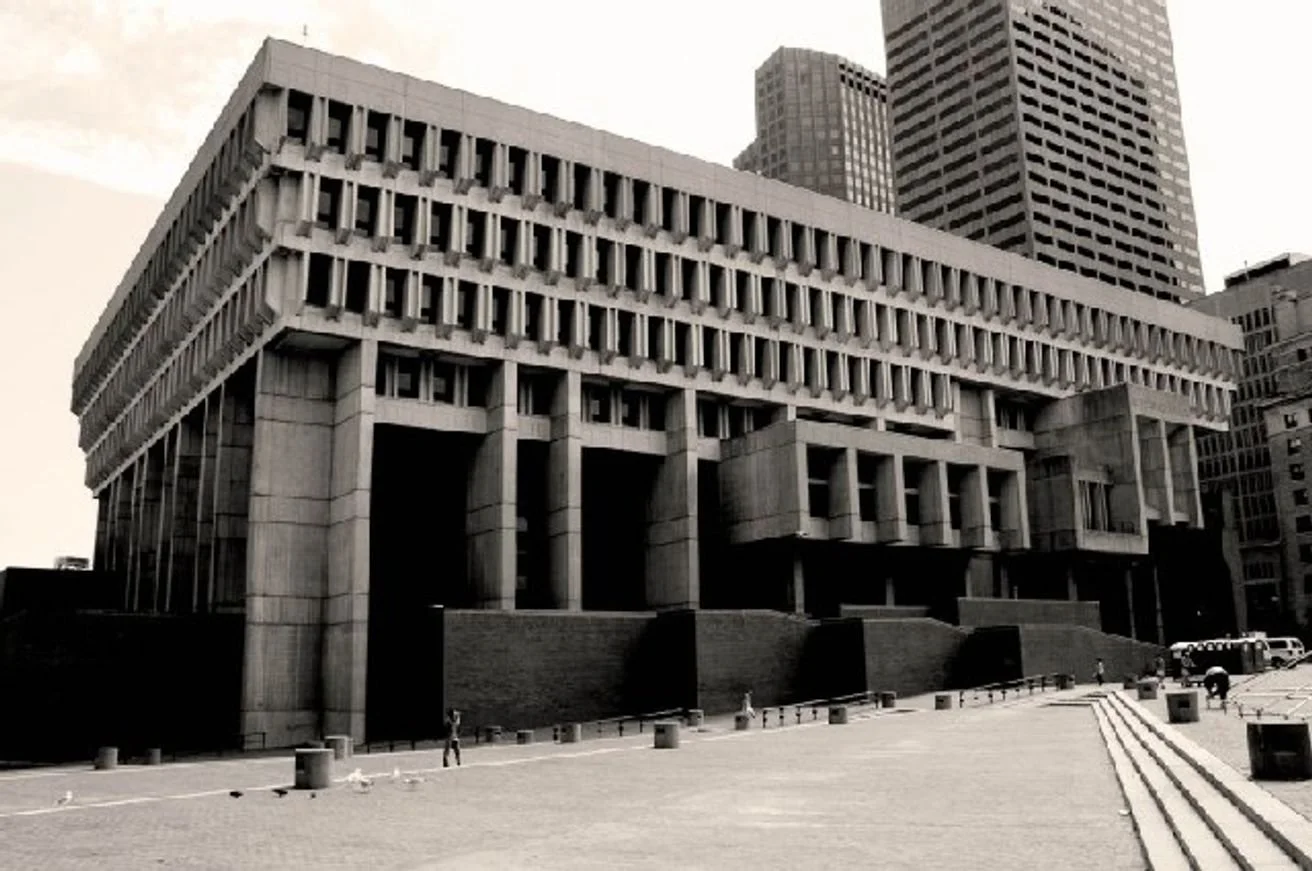
Brutalism’s sustainability potential is now recognized. Boston City Hall (Kallmann, McKinnell & Knowles, 1968) is a high-profile case. Architectural teams have undertaken refurbishment rather than demolition, acknowledging that demolition wastes history and embodied carbon.
Practical Takeaways for Designers
Appreciate Materiality: Brutalism teaches us about honest materials. Use concrete or brick thoughtfully, exposing textures and letting materials speak for themselves.
Use Light and Shadow: Deep-set windows and overhangs create dramatic shadows. Even today, using strong geometry and sunlight can define spaces powerfully.
Plan for Longevity: Like old Brutalist towers, design with future reuse in mind. Sturdy structure means adaptability – consider how spaces can transform over time.
Balance Scale: If you can’t build huge volumes, use heavy textures or bold accents to invoke Brutalism’s presence. A small project can borrow the style’s spirit through material palette and form.
Embrace Context: In warm climates (like Mexico), shading devices and textured concrete help mitigate heat while nodding to the Brutalist aesthetic.