The Essential Home: How Smart Design Makes Small Spaces Feel Bigger, Calmer, and More Affordable
The Problem: Why “Affordable” Often Feels Like “Compromised”
Affordable housing has long been framed as a trade-off.
Lower cost usually means smaller spaces, lower-quality materials, and environments that feel compressed, chaotic, and overstimulating. The result is not just a spatial problem—it’s a psychological one.
When space is poorly designed:
Clutter becomes inevitable
Light is obstructed
Movement is restricted
The issue isn’t size.
It’s how space is organized.
Rethinking Value: Volume Over Area
The Essential Home proposes a simple but powerful shift:
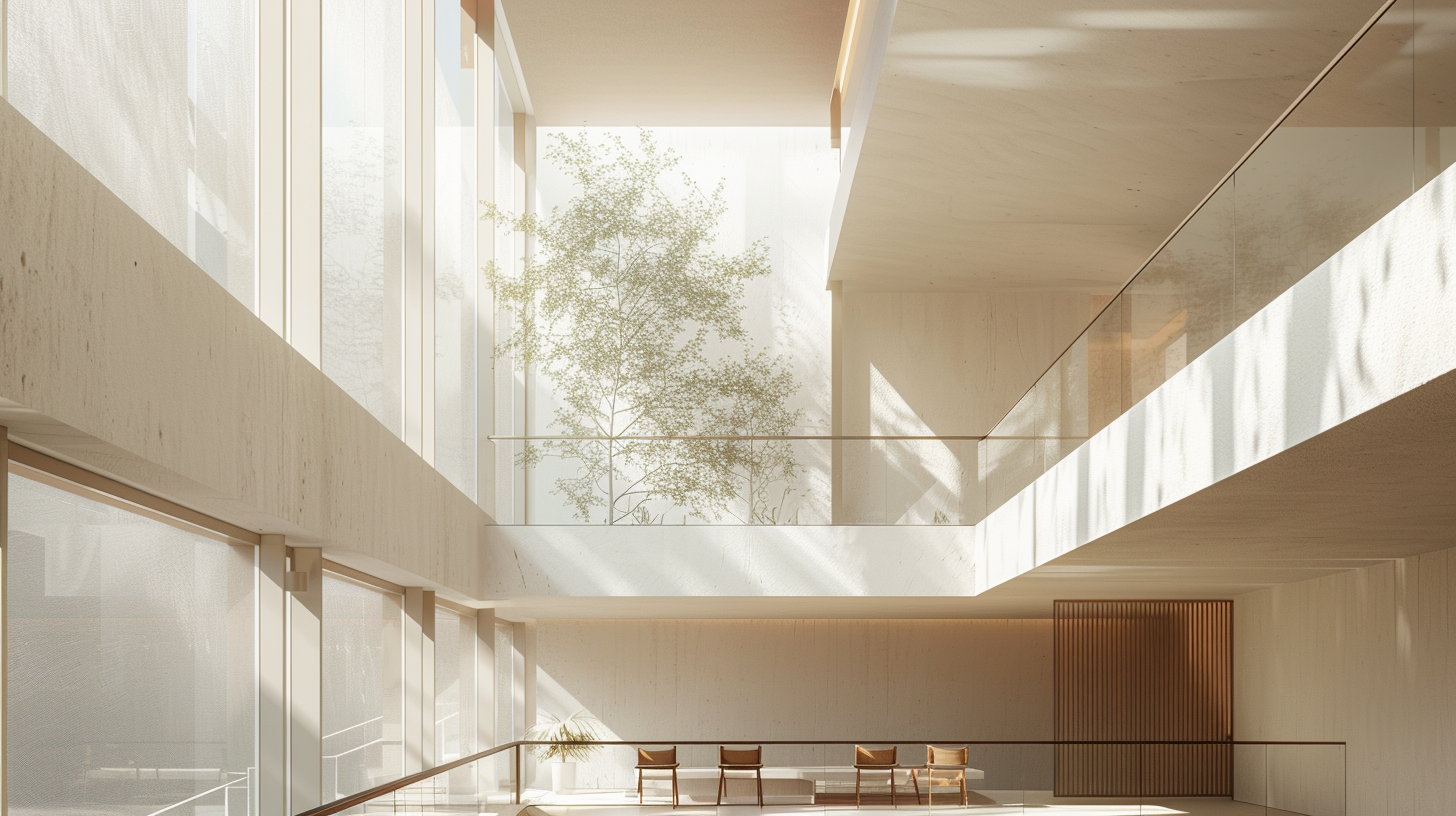
Prioritize volume over area.
Instead of focusing on square meters, the design maximizes:
Vertical space
Visual openness
Light distribution
Functional compression
This creates the perception—and experience—of a larger, calmer environment without increasing cost.
Research in environmental psychology shows that perceived space has a stronger impact on well-being than actual dimensions. High ceilings, clear sightlines, and unobstructed layouts reduce cognitive load and improve mood.
The Science: Why Clutter Increases Stress
Studies from neuroscience and environmental psychology indicate:
Visual clutter competes for attention → increases mental fatigue
Disorganized environments raise cortisol levels
Limited spatial clarity reduces focus and emotional regulation
In contrast:
Open spaces improve cognitive performance
Minimal environments reduce anxiety
Organized layouts enhance perceived control
This is where architecture becomes more than form—it becomes regulation.
The Solution: The “Smart Wall”
At the core of The Essential Home is a single intervention:
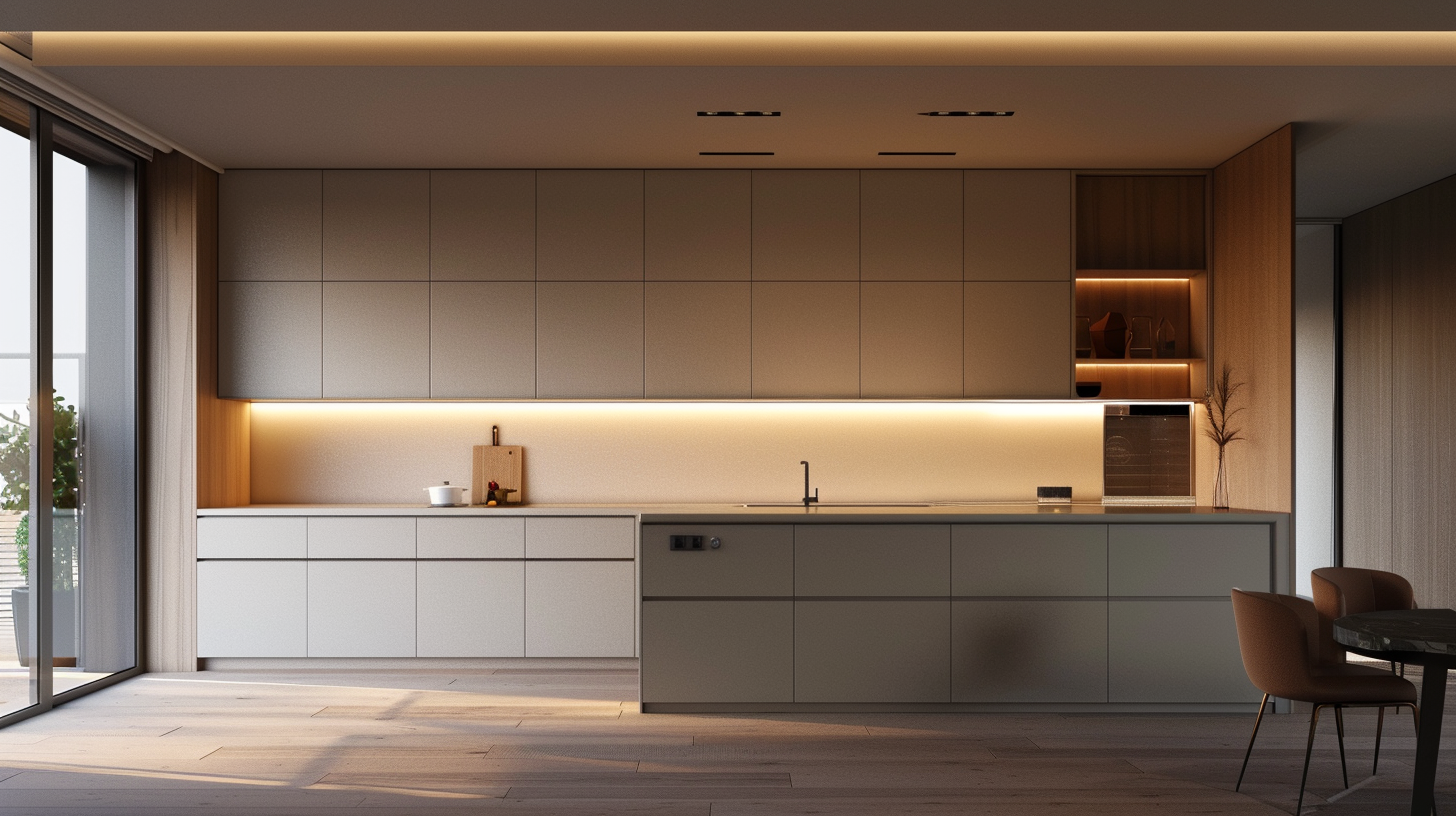
The Smart Wall
A continuous, built-in system that runs along one side of the home, integrating:
Storage
Kitchen
Appliances
Closets
Utility systems
What it does:
Eliminates visual clutter
Everything is concealed within a unified plane.Frees the living area
The rest of the space remains open and flexible.Creates spatial calm
The absence of visual noise allows the mind to rest.Improves functionality
Every element has a defined place.
Material Strategy: Affordable ≠ Low Quality
The project uses standard, accessible materials, but rethinks their application:
Plywood → custom joinery systems
Concrete → thermal mass + structural efficiency
Brick → durability + local availability
The key is not the material itself, but how it is composed.
By simplifying construction systems:
Costs are reduced
Maintenance is easier
Scalability increases
Design Hack #1: Hide Everything You Don’t Need to See
The fastest way to improve any space:
Reduce visible clutter by 80–100%
Even in small homes:
Concealed storage = immediate calm
Clean surfaces = perceived order
Fewer visual interruptions = better focus
Design Hack #2: Use Light to Expand Space
Light is the most underutilized “material” in affordable housing.
Strategies:
Maximize natural light entry
Use indirect lighting instead of overhead glare
Keep window paths unobstructed
Light doesn’t just illuminate space—it defines it.
Design Hack #3: Create One Clear Axis
A continuous visual line (like the Smart Wall) creates:
Orientation
Flow
Spatial coherence
When the eye understands a space instantly, stress decreases.
Design Hack #4: Neutral, Warm Material Palette
Overstimulating color palettes increase cognitive load.
Instead:
Warm neutrals (sand, wood, soft gray)
Consistent textures
Minimal contrast
This creates a regulating environment, not just a decorative one.
The Bigger Idea: Dignity Through Design
Affordable housing should not feel like a compromise.
It should feel:
Calm
Intentional
Functional
The Essential Home reframes the conversation:
It’s not about building bigger.
It’s about building smarter.
Your environment is constantly shaping your behavior, your stress levels, and your sense of control.
Even small design decisions—light, storage, layout—can radically change how a space feels.
The question is no longer:
“How much space do we have?”
But:
“How well is that space working for us?”