Why Your Small Apartment Drains Your Mental Health: The Science of Design Psychology (And How to Fix It)
You come home. You drop your keys. And somehow, even before anything has happened, your shoulders creep up toward your ears.
If that sounds familiar, you're not imagining it — and you're definitely not alone. A growing body of environmental psychology research points to something interior designers have long suspected: the size, layout, and sensory quality of your home directly shapes your stress levels, mood, and even your cognitive function.
Small apartments aren't inherently bad for you. But unintentional small-space design — the kind most of us inherit rather than choose — can quietly work against your nervous system every single day. The good news? Once you understand the psychology behind it, you can redesign your space to support your mental health instead of sabotaging it.
The Psychology Behind Small Spaces and Stress
Design psychology (sometimes called environmental psychology) studies how physical environments influence human emotion, behavior, and cognition. Three concepts show up again and again when researchers look at compact living spaces:
Perceived control. Humans have a deep psychological need to feel in control of their environment. When a space is cluttered, poorly zoned, or forces you to constantly negotiate for room, that sense of control erodes — and chronic loss of control is strongly linked to elevated cortisol and anxiety.
Cognitive load. Every object in your visual field is something your brain has to process, even unconsciously. A cluttered small apartment creates constant low-grade "visual noise," which taxes attention and makes it harder to relax or focus.
Restorative environments. Attention Restoration Theory suggests that certain environments — ones with natural light, greenery, and visual openness — help the brain recover from mental fatigue. Small, dim, cluttered spaces tend to do the opposite: they deplete rather than restore.
None of this means square footage determines happiness. It means how a space is designed relative to its size determines whether it feels like a sanctuary or a pressure cooker.
7 Signs Your Apartment May Be Affecting Your Mental Health
You feel a wave of low-grade dread walking through your front door.
You avoid inviting people over because of clutter or lack of space.
You feel foggy or unfocused at home, even when you're not tired.
Small annoyances (a pile of mail, a messy counter) trigger outsized irritation.
You sleep worse at home than you do elsewhere.
You feel like there's "nowhere to go" to decompress.
Your space feels the same in every room — no visual or emotional variety.
If two or more of these resonate, your apartment likely isn't the villain — but its design may be working against you.
The Design Psychology Fixes: How to Reclaim Your Small Space
1. Declutter With Intention, Not Just Aesthetics
Decluttering isn't about minimalism as a style — it's about reducing cognitive load. Start with surfaces your eyes hit first: entryways, countertops, coffee tables. Clearing these "visual anchor points" has an outsized calming effect compared to decluttering closets first.
2. Maximize Natural Light
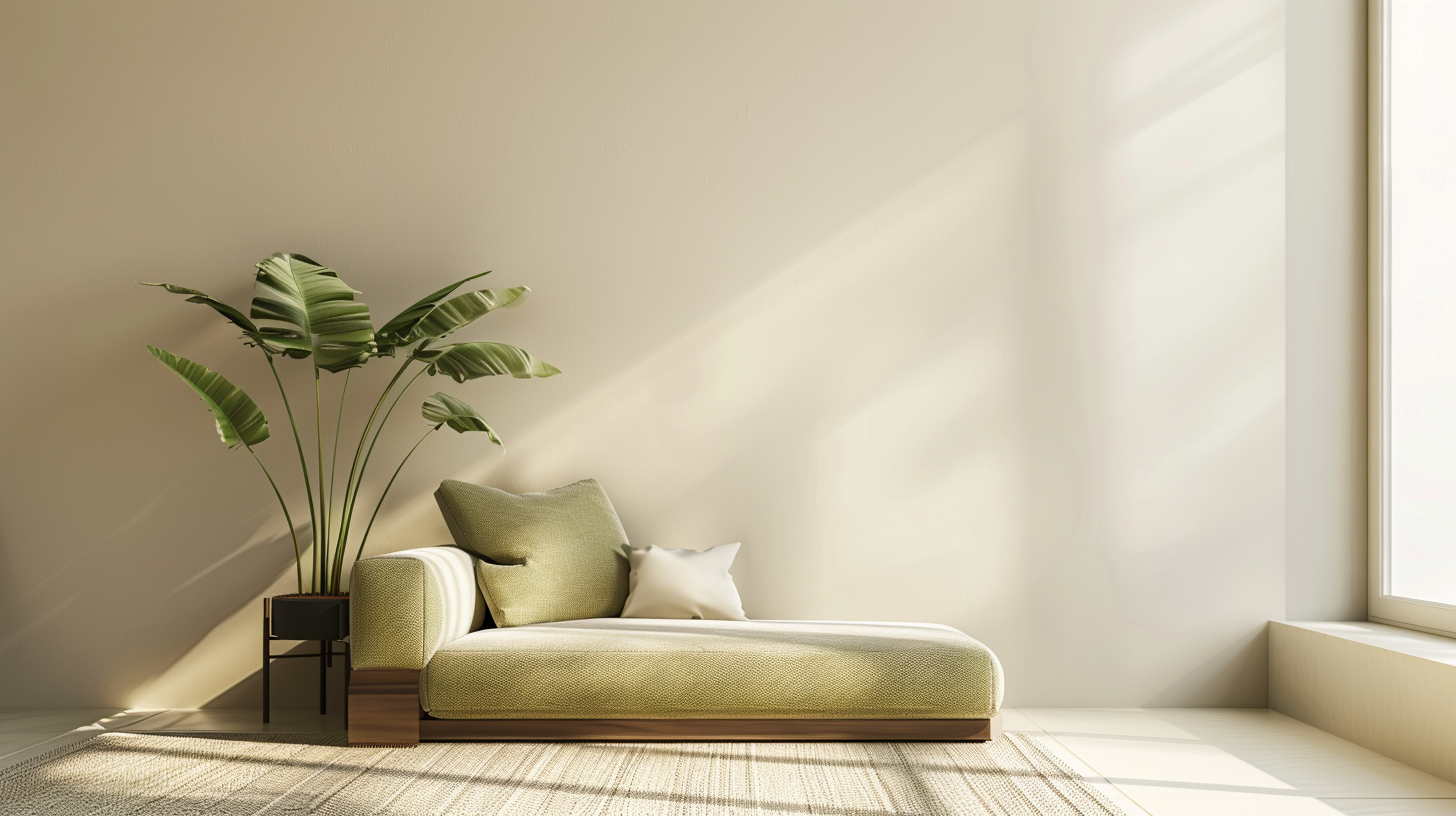
Light exposure regulates circadian rhythm, which directly affects mood and sleep quality. Swap heavy curtains for sheer ones, use mirrors to bounce daylight deeper into the room, and avoid blocking windows with furniture — even tall furniture pushed slightly away from a window can restore airflow and light.
3. Use Color Psychology Strategically
Cool, muted tones (soft blues, sage greens, warm neutrals) tend to lower arousal and feel expansive. Reserve saturated, high-energy colors for small accents rather than entire walls in compact rooms — large blocks of intense color can make a small space feel like it's closing in.
4. Create Visual Breathing Room With Vertical Space
When floor space is limited, the eye needs somewhere to rest. Tall, narrow shelving draws the gaze upward and makes ceilings feel higher. Leave at least one wall visually "quiet" — no art, no shelving — to give the room a place to exhale.
5. Zone Your Space, Even Without Walls
The brain associates specific areas with specific activities. A small apartment that blends sleeping, working, and relaxing into one undefined zone can leave your nervous system perpetually unsure whether it's "on" or "off." Use rugs, lighting, or furniture placement to visually separate a work corner from a rest corner — even a few feet of distinction helps.
6. Bring in Biophilic Design
Exposure to natural elements — plants, natural materials like wood and rattan, even nature imagery — has been consistently linked to lower stress and improved mood. One or two well-placed plants can do more for how a room feels than an extra piece of furniture.
7. Choose Multi-Functional, Not Just Small, Furniture
The goal isn't shrinking your furniture — it's reducing the number of objects competing for attention. A storage ottoman, a fold-away desk, or a bed with built-in drawers reduces both clutter and decision fatigue, which reinforces that sense of control your brain is craving.
The Real Shift: From "Small and Stressful" to "Compact and Calming"
The difference between an apartment that drains you and one that restores you often isn't square footage — it's intentionality. Every design choice either adds to your cognitive load or reduces it; either restricts your sense of control or restores it. Once you start seeing your space through that lens, small changes stop feeling cosmetic and start feeling like genuine self-care.
You don't need a renovation. You need a plan grounded in how your brain actually experiences a room.